

Projects
Know-how, creativity and cooperation in cross-organisational teams are the ingredients in the development of innovative media solutions.
See what drives the Cube-Tec development team and see in what areas we have created new solutions in the past:
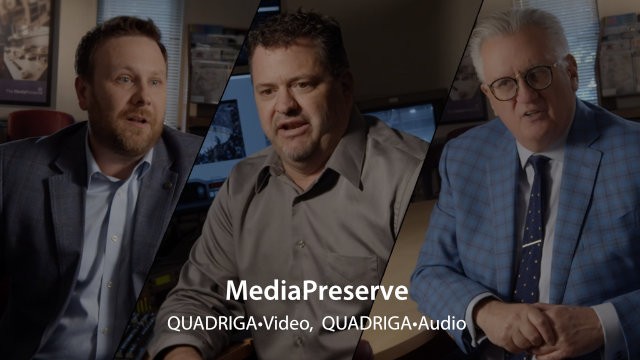
The MediaPreserve Interviews
In these interviews the team from The MediaPreserve – as one of the largest digitization service providers worldwide – permits a deep insight into their daily work with QUADRIGA•Video. It’s a great opportunity to get first-hand feedback on the operational experience The MediaPreserve team … Read more.
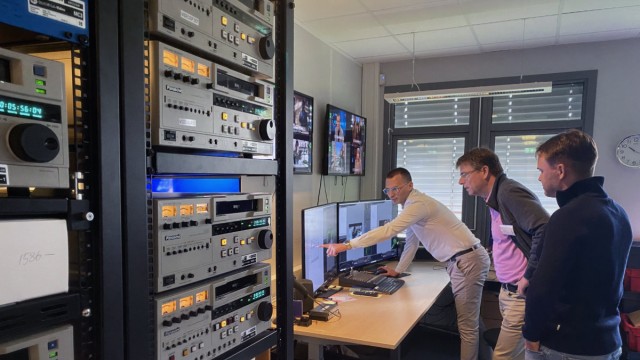
QUADRIGA•Video migrates 550,000 hours of Videotapes for the National Library of Norway
Approximately 550,000 hours of program material on video cassettes have to be preserved in the National Library of Norway's digital long-term archive. These recordings are part of legal deposit recordings of the Norwegian Broadcasting Corporation. In order to protect these unique broadcasting … Read more.
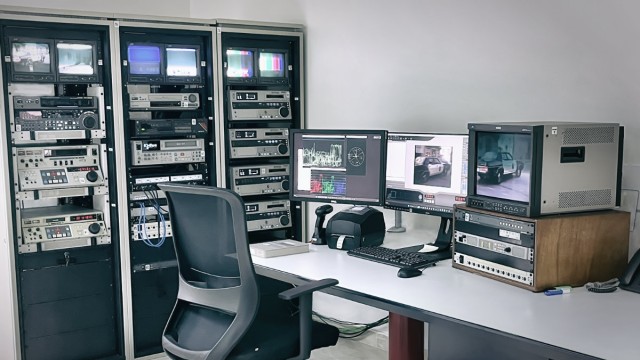
The Saudi Center for Digital Content
The Saudi Center for Digital Content is a Saudi Arabian government's reference and training center. The aim of the SCDC is to teach the profession of audiovisual migration at the highest international quality standards. SCDC is supposed to support Saudi archives in their digitization and media … Read more.
Interview with Thomas Worschech (DFF)
Thomas Worschech (DFF) and Jörg Houpert (Cube-Tec) talk about how working practices have changed since the QUADRIGA INSPECTIONscan was introduced at Deutsches Filminstitut & Filmmuseum. The interview was conducted in German, but there are extensive English subtitles, which you can activate at … Read more.
AVEROS
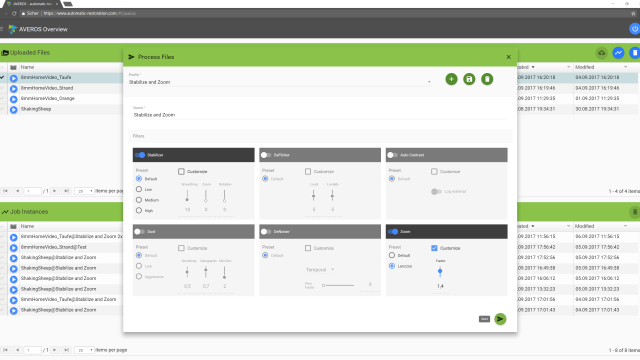
Media enhancement and restoration is currently an intensive manual process. The goal of AVEROS is to create an easily accessible, automated, scalable and fast video restoration and enhancement service operable by non-expert users. Read more.
The Chase After Millions
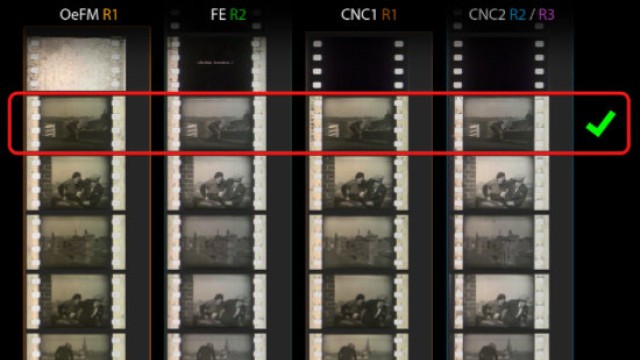
An advanced restoration project as proof-of-concept for a new film inspection tool DFF - Deutsches Filminstitut & Filmmuseum in Frankfurt am Main, Germany, has a film archive department in Wiesbaden which preserves about 27,000 print and pre-print elements. This film archive collection houses a … Read more.
PrestoSpace
PrestoSpace is a European IST research project in the 6th frame program. The project leaders are INA, BBC and RAI. PrestoSpace stands for "Preservation towards storage and access. Standardised Practices for Audiovisual Contents in Europe". Read more.
Adobe Plugins
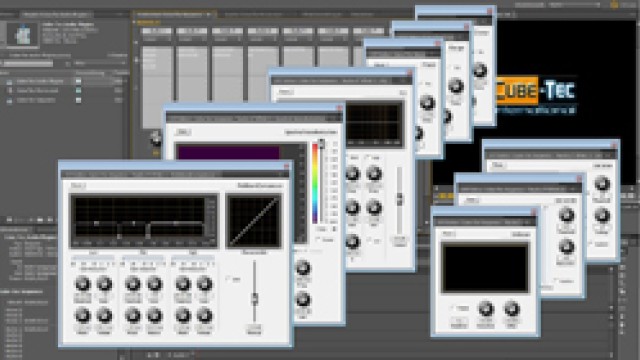
Adobe's Premiere Pro CS5 features dramatically enhanced audio options for mono, stereo and surround sound. Cube-Tec has developed these audio plugins for this exciting new version of the world's leading NLE. Fourteen state-of-the-art plugins provide the daily needed functionality in professional … Read more.
Sound and Vision
The Netherlands Institute for Sound and Vision (Beeld en Geluid) in Hilversum preserves 70 percent of the Dutch audio-visual heritage. With around 700.000 hours of television, radio, music and film, Sound and Vision is one of the largest audio-visual archives in Europe. Read more.

AIATSIS - Case Study
The Australian Institute of Aboriginal and Torres Strait Islander Studies (AIATSIS) is the world's premier institution for information and research about the cultures and lifestyles of Aboriginal and Torres Strait Islander peoples, past and present. Read more.
Universal Music
The Netherlands Institute for Sound and Vision (Beeld en Geluid) in Hilversum preserves 70 percent of the Dutch audio-visual heritage. With around 700.000 hours of television, radio, music and film, Sound and Vision is one of the largest audio-visual archives in Europe. Read more.
We can help
You need a technically sophisticated media solution that you can not just buy off the shelf? We should talk about it, we love technical challenges.
Read more...
Interested in a joint research project with Cube-Tec?
Read more...
Would you like to join the Cube-Tec development team? We are always looking for talented people.
Read more...